
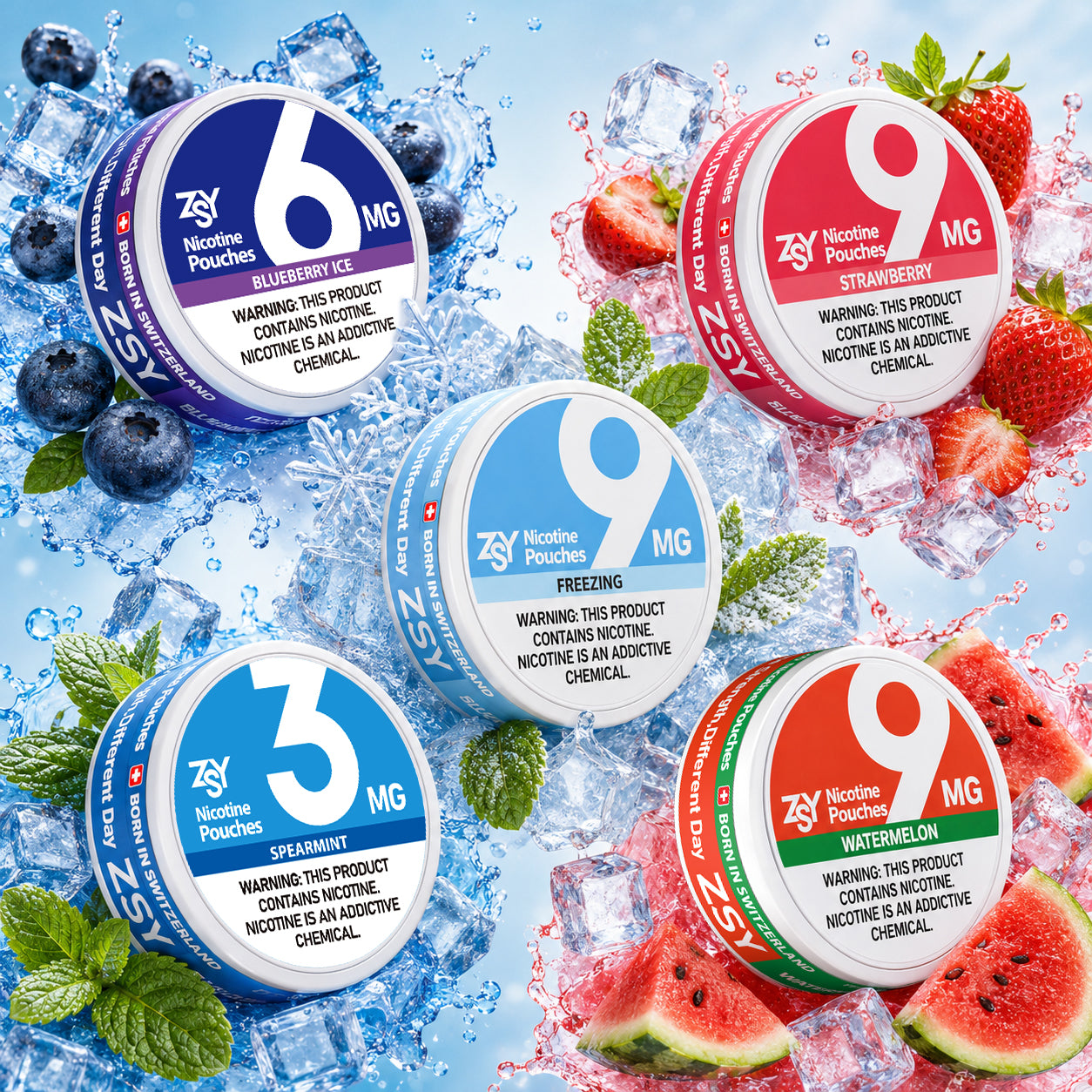


Do Nicotine Pouches Stain Teeth? What Adults Should Know
If you're an adult nicotine user who cares about keeping your smile clean, you may wonder: Do nicotine pouches stain your teeth?
The short answer is that nicotine pouches are not commonly associated with the same type of visible tooth staining caused by cigarettes or traditional smokeless tobacco. They don't produce tar-filled smoke, and tobacco-leaf-free pouches don't contain the dark tobacco material found in products such as chewing tobacco. Limited laboratory research has found only minimal staining from nicotine pouch exposure compared with artificial saliva. However, long-term clinical research remains limited, and nicotine pouches can still affect the mouth and gums in other ways.
| Oral Appearance Factor | Cigarettes / Traditional Tobacco | Nicotine Pouches | ZSYPOUCH |
|---|---|---|---|
| Smoke & Tar | Yes | No | No |
| Dark Tobacco Leaf | Present in many traditional products | Typically absent | Tobacco-leaf-free |
| Direct Tooth Pigment Exposure | Higher | Generally lower | No smoke or tobacco leaf |
| Sugar | Varies | Depends on product | Zero Sugar |
| Pouch Contact | — | Localized under the lip | Soft cellulose-based pouch |
| Can Oral Irritation Occur? | Yes | Yes | Nicotine products are not risk-free |
What Actually Causes Teeth to Stain?
To understand whether nicotine pouches stain teeth, it helps to understand why teeth become discolored in the first place.
The American Dental Association divides tooth discoloration broadly into two categories:
Extrinsic Staining
Extrinsic stains develop on the outer surface of the tooth.
Common causes include:
-
Coffee
-
Tea
-
Red wine
-
Cola
-
Dark-colored foods
-
Cigarette smoking
-
Certain tobacco products
-
Some medications and mouthrinses
These substances can contain pigments or compounds that gradually collect on enamel. The ADA specifically notes that tobacco use and strongly pigmented foods and beverages are common contributors to external tooth staining.
Intrinsic Discoloration
Intrinsic discoloration occurs within the tooth itself.
It may be associated with:
-
Natural aging
-
Dental trauma
-
Certain medications
-
Tooth development
-
Some dental conditions
This type of discoloration isn't simply a surface stain and cannot always be removed with ordinary brushing.
When people ask whether nicotine pouches "stain teeth," they're usually talking about extrinsic surface staining.
Why Cigarettes Can Stain Teeth
Cigarette smoke exposes teeth repeatedly to combustion byproducts and pigmented material.
The ADA recognizes tooth staining as one of the oral effects associated with cigarette smoking.
That matters when comparing cigarettes with nicotine pouches.
Nicotine pouches:
Don't burn.
Don't create smoke.
Don't create ash.
Don't produce tar-filled cigarette smoke.
And tobacco-leaf-free nicotine pouches don't contain the dark tobacco material found in traditional oral tobacco.
That removes several of the major sources traditionally associated with visible tobacco-related tooth staining.
But this distinction does not mean nicotine pouches are harmless to your mouth.
That's a separate question — and an important one.
So, Do Nicotine Pouches Stain Teeth?
Based on the evidence currently available, nicotine pouches appear much less likely to cause obvious tooth staining than combustible cigarettes or traditional smokeless tobacco.
A systematic review examining staining of dental hard tissues and restorative materials found that one laboratory study of nicotine pouches showed only minimal additional staining compared with an artificial-saliva control. By comparison, smokeless tobacco produced substantially more staining in the studies included in that review.
There is an important limitation:
This does not prove that every nicotine pouch will never contribute to discoloration in every person.
The evidence base is still relatively small, and long-term real-world studies of nicotine pouch users are limited.
Your tooth color can also be influenced by:
-
Coffee consumption
-
Tea
-
Soda
-
Wine
-
Smoking history
-
Plaque accumulation
-
Oral hygiene
-
Natural enamel color
-
Aging
So if you notice discoloration, it may be difficult to attribute it to one product alone.
What Makes Nicotine Pouches Different From Traditional Smokeless Tobacco?
Traditional chewing tobacco and similar tobacco products contain actual tobacco plant material.
That matters because tobacco products can expose teeth to darker compounds and residue.
The ADA associates smokeless tobacco use with tooth discoloration in addition to several more serious oral-health effects.
Modern tobacco-leaf-free nicotine pouches work differently.
The pouch stays in a relatively localized position between the lip and gum rather than coating the mouth with dark tobacco material.
This difference is one reason nicotine pouches generally should not be expected to stain teeth in the same way as traditional oral tobacco.
What About ZSYPOUCH?
ZSY is designed as a tobacco-leaf-free, smoke-free oral nicotine pouch.
Our current product formulation lists ingredients including:
-
Sodium Carbonate
-
Sodium Alginate
-
Plant-Based Microcrystalline Cellulose
-
Nicotine
-
Natural Flavors
-
Steviol Glycosides
-
Menthol
-
Water
ZSY is also formulated with zero sugar, and its pouch material is a cellulose-based, food-contact-tested nonwoven material designed for a soft feel, moisture retention, and smooth flavor release.
From a tooth-staining perspective, the important distinctions are:
No cigarette smoke.
No tar from combustion.
No tobacco leaf.
Zero sugar.
But we don't translate those characteristics into an unrealistic claim like:
"ZSY cannot affect your mouth."
Nicotine pouches still sit directly against oral tissue, and current research shows that oral health deserves attention.
Tooth Staining Is Not the Same as Oral Health
This distinction is extremely important.
A product can be less likely to visibly stain teeth without being harmless to the gums or oral mucosa.
Current scientific evidence on nicotine pouches remains limited, but researchers have documented oral changes among some users.
A 2024 systematic review found reported effects including:
-
Localized mucosal changes
-
White lesions at pouch-placement sites
-
Dry mouth
-
Soreness
-
Gingival blisters
-
Other local oral symptoms
The authors emphasized that evidence remains limited and that more research is needed to understand both short- and long-term oral effects.
More recent clinical research published in 2026 has also continued examining mucosal changes, gingival recession, and other dental findings among nicotine pouch users.
So the responsible answer is:
Lower staining potential does not mean zero oral-health risk.
Can Nicotine Pouches Affect Your Gums?
They can.
Unlike coffee or cigarettes, where staining tends to concern the tooth surface, nicotine pouches spend extended time in direct contact with a relatively small area of oral tissue.
That localized contact is one of the main areas researchers are studying.
Clinical reports and reviews have described effects such as:
-
Gum irritation
-
Soreness
-
Localized white patches
-
Gingival changes
-
Gum recession in some users
The ADA has highlighted concerns around localized tissue damage and recommends that nicotine pouch users monitor for persistent oral changes and discuss their use with a dental professional.
If you notice persistent:
red or white patches, sores, bleeding, pain, or gum recession, don't simply assume it's normal.
Remove the pouch and speak with a dentist or other qualified healthcare professional.
Does Pouch Placement Matter?
Yes.
Most nicotine pouches are placed between the lip and gum.
ZSY users commonly place the pouch under the upper lip.
Because the pouch remains in one location, the product's contact with oral tissues is localized.
That can be good from a staining perspective because the product isn't spreading dark residue across all of the tooth surfaces.
But repeated contact with the same area is also one reason gum and mucosal health matter.
In other words:
Less tooth-wide exposure does not mean the contact area should be ignored.
If one spot becomes persistently uncomfortable or irritated, stop using the pouch there and seek professional advice if the problem continues.
Does a White Pouch Mean White Teeth?
Not necessarily.
It is easy to oversimplify the question.
Tooth color is affected by your entire routine.
For example, someone could use tobacco-leaf-free nicotine pouches but also drink:
four coffees every day.
Another person might drink:
tea, cola, and red wine regularly.
These behaviors can contribute significantly to surface staining, regardless of nicotine pouch use. The ADA identifies coffee, tea, cola, red wine, tobacco use, and other highly pigmented exposures among common contributors to extrinsic discoloration.
So a white pouch doesn't function as a whitening product.
It simply lacks some of the dark staining sources associated with traditional combustible and oral tobacco.
Does Nicotine Itself Stain Teeth?
This is where the answer becomes less straightforward.
Consumers often hear statements like:
"Nicotine turns teeth yellow."
But real-world tobacco staining involves much more than nicotine alone.
Cigarette smoking exposes teeth to a complex mixture of combustion products, pigments, and tar.
Research specifically isolating nicotine pouch exposure suggests that staining is much lower than with traditional smokeless tobacco, but the available evidence remains limited.
So rather than claiming nicotine itself has zero potential effect, the more accurate takeaway is:
Nicotine pouches don't expose teeth to the same staining environment as smoking.
That's an important distinction.
What About Flavored Nicotine Pouches?
Flavor alone doesn't automatically mean a pouch will stain teeth.
What matters more for visible surface staining is whether the mouth is repeatedly exposed to strongly pigmented compounds that adhere to enamel.
ZSY offers a broad flavor range — including mint, cooling, fruit, and specialty profiles — using natural flavors within its current formulation.
However, flavor experience and tooth color are two different questions.
If you're concerned about unusual discoloration with any oral product, the right response is to look at:
-
Your complete diet
-
Beverage consumption
-
Smoking history
-
Oral hygiene
-
Dental health
-
Product usage
rather than assuming flavor alone is responsible.
Does ZSY's Zero-Sugar Formula Matter for Teeth?
ZSY is currently formulated as Zero Sugar.
That's relevant when discussing the formulation, but it needs to be interpreted correctly.
Sugar can contribute to tooth decay when oral bacteria metabolize fermentable carbohydrates and produce acids.
But:
Zero sugar does not mean zero dental risk.
And it does not make nicotine pouches dental-care products.
ZSY's zero-sugar formulation is simply one characteristic of the product.
Good oral hygiene still matters.
Does ZSY's Wet & Smooth Format Affect Tooth Staining?
There is currently no good evidence showing that a moist nicotine pouch is inherently less likely to stain teeth than a dry nicotine pouch.
So we don't make that claim.
Where ZSY's Wet & Smooth format does matter is pouch feel and moisture behavior.
ZSY uses a cellulose-based pouch material designed to retain moisture and provide a softer feel, while the brand positions its pouch format around optimized moisture and smoother flavor release.
That is primarily a sensory and formulation difference, not a proven tooth-whitening advantage.
Keeping those claims separate is important.
How Can Adult Nicotine Users Reduce Tooth Staining?
If keeping teeth looking clean is important to you, focus on the biggest controllable factors.
Brush Consistently
Maintain a regular brushing routine using fluoride toothpaste.
Good plaque control can help reduce the buildup of external staining.
Clean Between Your Teeth
Floss or use another interdental cleaning method appropriate for you.
Tooth color isn't only about the front surface.
Drink Water
Water can help clear food and beverage residue from the mouth.
It is especially useful after strongly pigmented drinks.
Pay Attention to Coffee and Tea
Nicotine pouches may get the attention because they're new, but your daily coffee routine may be a much bigger contributor to staining.
The ADA identifies coffee and tea among common sources of extrinsic tooth discoloration.
Don't Smoke
From a tooth-color perspective alone, cigarette smoking is a well-established contributor to staining.
Visit Your Dentist Regularly
Professional cleanings can address many surface stains, and your dentist can distinguish cosmetic discoloration from an actual dental or gum problem.
If you use nicotine pouches, tell your dentist.
That gives them useful context when examining your gums and oral tissues.
When Should You Talk to a Dentist?
Changes in tooth color are usually not an emergency.
But some oral changes deserve more attention.
Talk to a dental professional if you notice:
-
Persistent gum irritation
-
Receding gums
-
Repeated bleeding
-
Pain at the pouch-placement site
-
Persistent white or red patches
-
Ulcers that don't heal
-
Unexplained tooth discoloration
-
Sensitivity or dental pain
The ADA has specifically highlighted persistent patches, ulceration, gum recession, and bleeding as signs nicotine pouch users should not ignore.
Don't try to diagnose persistent oral changes based on appearance alone.
ZSY's Approach: A Cleaner Format, Without Pretending Nicotine Is Risk-Free
At ZSY, we believe adult nicotine users should get clear information rather than exaggerated health claims.
ZSY is designed around a modern oral format with:
No smoke.
No combustion.
No tobacco leaf.
Zero sugar.
A soft cellulose-based pouch.
Controlled moisture for a Wet & Smooth experience.
These characteristics mean ZSY does not expose teeth to the same tar-filled smoke or dark tobacco material associated with traditional smoking and chewing tobacco.
But that doesn't make nicotine harmless.
Nicotine is addictive, and oral pouch use may still affect gums and oral tissues.
For us, transparency matters more than pretending otherwise.
Nicotine Pouches vs. Cigarettes: Think Beyond Staining
If you're comparing the two only because you're worried about yellow teeth, you're looking at a very small part of the picture.
Cigarette smoking is associated with multiple oral-health problems in addition to tooth staining, including periodontal disease, impaired healing, mucosal lesions, and oral cancer risk.
Nicotine pouches eliminate combustion and smoke exposure, but their long-term oral-health effects are still being studied.
So the question shouldn't simply be:
"Which one keeps my teeth whiter?"
A better question is:
"What are the known and unknown effects of the nicotine product I'm using?"
That's the more useful way to think about harm and oral health.
Bottom Line: Do Nicotine Pouches Stain Your Teeth?
Current evidence suggests that nicotine pouches are unlikely to stain teeth in the same way cigarettes or traditional smokeless tobacco can.
They don't generate smoke or tar.
Tobacco-leaf-free pouches don't contain dark tobacco plant material.
And limited laboratory evidence has shown only minimal staining from nicotine pouch exposure compared with artificial saliva.
For ZSYPOUCH specifically:
No smoke.
No tobacco leaf.
Zero sugar.
Soft cellulose-based pouch.
Wet & Smooth controlled-moisture format.
But here's the part that matters:
Less likely to stain does not mean risk-free for your mouth.
Research on nicotine pouches is still developing, and localized gum or mucosal changes have been reported among users.
Keep up with good oral hygiene.
Pay attention to changes in your mouth.
Tell your dentist if you use nicotine pouches.
And if you notice persistent irritation, bleeding, recession, sores, or unusual discoloration, get it checked.
For adult nicotine users interested in ZSY's tobacco-leaf-free, zero-sugar, Wet & Smooth pouch format, explore the [ZSYPOUCH Product Collection Page].
ZSYPOUCH — A Cleaner Format. A More Informed Choice.
WARNING: This product contains nicotine. Nicotine is an addictive chemical.
For adult nicotine users age 21+ only. Nicotine pouches are not risk-free. If you do not currently use nicotine or tobacco products, do not start.

Written by zsypouch
Leave a comment
This site is protected by hCaptcha and the hCaptcha Privacy Policy and Terms of Service apply.